The global electronics industry has birthed an unexpected paradox: our discarded gadgets now contain more precious metals than many natural ores. As traditional mining faces environmental and ethical scrutiny, a new frontier of resource recovery is emerging from the urban sprawl. Cities worldwide are sitting atop untapped mineral wealth in the form of obsolete smartphones, computers, and appliances - a phenomenon now termed "urban mining." This radical approach to metal sourcing could revolutionize how we think about waste and resource security in the coming decades.
Modern electronics contain a periodic table's worth of valuable materials. A typical smartphone harbors gold, silver, platinum, copper, and rare earth elements - all encased in plastic and silicon. The concentration of gold in mobile phones is actually 50 times higher than in gold ore mined from the earth. Yet until recently, these micro-deposits ended up in landfills or were processed through primitive, polluting methods in developing countries. The emergence of sophisticated urban mining operations is changing this dynamic, transforming e-waste from environmental liability to economic opportunity.
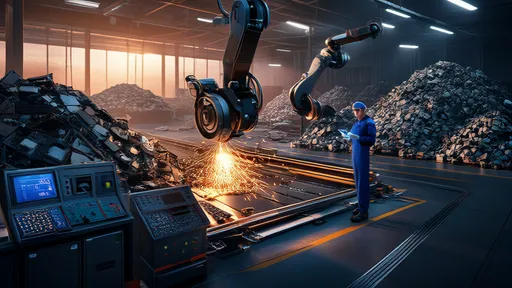
Green metallurgy represents the technological vanguard of this movement. Unlike traditional smelting that relies on extreme heat and toxic chemicals, these advanced processes use precise chemical reactions, electrochemical methods, and even biological agents to selectively extract metals. Some facilities employ engineered bacteria that feed on circuit boards, excreting pure metal ions in solution. Others use solvent systems that can dissolve gold without generating cyanide-laced byproducts. These innovations dramatically reduce energy consumption - some methods require as little as 10% of the energy needed for conventional mining and refining.
The environmental benefits extend beyond energy savings. For every ton of smartphones recycled through urban mining, we avoid excavating approximately 200 tons of earth in traditional mines. Water usage plummets from thousands of gallons per ounce of metal to mere liters. Perhaps most crucially, these methods prevent the release of mercury, lead, and other hazardous substances that often escape during informal e-waste processing. When done properly, urban mining could neutralize one of the fastest-growing pollution streams on the planet.
Economic incentives are driving rapid adoption. The United Nations estimates the value of raw materials in global e-waste at over $62 billion annually - more than the GDP of many nations. Japan has emerged as a leader, with the city of Tohoku establishing an urban mine that recovers enough gold to mint Olympic medals. Belgium's Umicore operates one of the world's most advanced facilities, processing 350,000 tons of e-waste yearly into pure metals. These operations prove that responsible recycling can be both ecologically sound and highly profitable.
Scaling urban mining faces significant challenges. Collection systems remain fragmented, with consumers often unaware of proper disposal channels. Many nations lack the technical capacity for sophisticated metal recovery, leading to continued exports of e-waste to developing countries. Product design also hampers recycling - modern devices increasingly use bonded materials that resist separation. Some manufacturers have started addressing this through modular designs that facilitate disassembly, but industry-wide standards remain elusive.
The policy landscape is beginning to reflect urban mining's potential. The European Union's Circular Economy Action Plan now mandates higher recycling rates for electronics, while China's National Sword Policy has restricted waste imports, forcing developed nations to handle their e-waste domestically. In the United States, several states have enacted extended producer responsibility laws that make manufacturers financially accountable for product end-of-life. These measures create the regulatory pressure needed to transform urban mining from niche practice to mainstream industry.
Technological breakthroughs continue to expand what's possible. Researchers at Rice University developed a flash Joule heating technique that vaporizes non-metal components from circuit boards in milliseconds, leaving behind pure metals. Other teams are working on "molecular recognition" technologies that can pluck specific metal ions from complex mixtures with pinpoint accuracy. As these methods mature, they promise to make urban mining increasingly efficient and economically viable for a wider range of materials.
The social dimension of urban mining cannot be overlooked. Properly implemented, it could provide safe, dignified employment in recycling facilities rather than the hazardous conditions found in informal scrap yards. Some initiatives now integrate urban mining with job training programs for disadvantaged communities. There's also growing recognition that nations could enhance their resource security by recovering metals domestically rather than relying on geopolitically unstable supply chains for mined materials.
Looking ahead, the convergence of environmental necessity and technological opportunity makes urban mining's ascent inevitable. As circular economy principles take hold and consumers demand more sustainable products, the recovery of metals from e-waste will likely become standard practice. The cities of tomorrow may feature neighborhood collection centers feeding sophisticated micro-refineries, creating localized loops of material use. What was once considered waste is rapidly being redefined as the most ethical ore body on Earth - one that grows larger with each passing year.
The transformation from trash to treasure won't happen overnight. It requires continued investment in recycling infrastructure, smarter product designs, consumer education, and supportive policies. But the foundation has been laid for a fundamental shift in how society views and values its electronic discards. Urban mining represents more than just an alternative to traditional extraction - it offers a blueprint for reconciling technological progress with environmental stewardship in the 21st century.

By /Aug 14, 2025

By /Aug 14, 2025

By /Aug 14, 2025

By /Aug 14, 2025

By /Aug 14, 2025

By /Aug 14, 2025

By /Aug 14, 2025

By /Aug 14, 2025

By /Aug 14, 2025

By /Aug 14, 2025

By /Aug 14, 2025
By /Aug 14, 2025

By /Aug 14, 2025

By /Aug 14, 2025

By /Aug 14, 2025

By /Aug 14, 2025

By /Aug 14, 2025

By /Aug 14, 2025

By /Aug 14, 2025

By /Aug 14, 2025
