The concept of storing biological data within DNA molecules has transitioned from science fiction to tangible reality. Scientists and technologists are now exploring the potential of DNA as a next-generation storage medium, capable of preserving vast amounts of information in an incredibly compact and durable form. This emerging field, often referred to as molecular data storage, leverages the natural properties of DNA—its density, stability, and longevity—to create what could become a global biological data repository. Unlike traditional electronic storage, which degrades over time and requires constant maintenance, DNA offers a promising alternative for archiving humanity's most critical information.
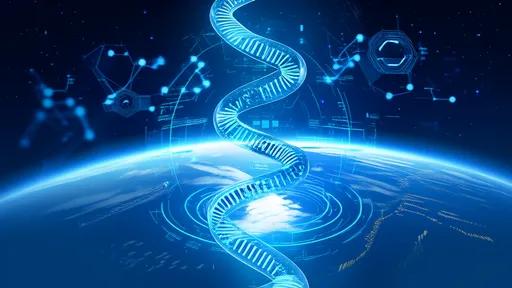
The idea of encoding digital data into DNA is not entirely new, but recent advancements in synthetic biology and computational methods have accelerated its feasibility. DNA's four-base structure (adenine, thymine, cytosine, and guanine) can be mapped to binary code, allowing for the translation of digital files into genetic sequences. Once synthesized, these sequences can be stored in a physical form—such as a test tube or a dried spot on a glass slide—where they remain stable for centuries under proper conditions. Researchers estimate that a single gram of DNA could theoretically hold up to 215 petabytes of data, a staggering capacity that dwarfs even the most advanced silicon-based storage solutions.
One of the most compelling advantages of DNA storage is its longevity. Traditional hard drives and magnetic tapes degrade within decades, requiring frequent migration to new formats to prevent data loss. In contrast, DNA preserved in cool, dry conditions can last for thousands of years, as evidenced by the recovery of genetic material from ancient fossils. This makes DNA an ideal medium for long-term archival purposes, such as preserving cultural heritage, scientific research, and governmental records. Institutions like the European Molecular Biology Laboratory and the Arch Mission Foundation have already begun experimenting with DNA as a means to safeguard humanity's knowledge for future generations.
Despite its potential, DNA storage is not without challenges. The current cost of synthesizing and sequencing DNA remains prohibitively high for widespread adoption. While the price of DNA synthesis has dropped significantly over the past decade, it still far exceeds the cost of conventional storage media. Additionally, the process of writing and reading data from DNA is time-consuming compared to electronic methods. Researchers are actively working on innovations to reduce costs and improve speed, but it may take years before DNA storage becomes economically viable for everyday use.
Another hurdle is the development of standardized encoding and retrieval protocols. Unlike digital storage, where file formats are well-established, DNA storage lacks universally accepted methods for data representation and error correction. Errors can occur during synthesis or sequencing, leading to data corruption if not properly managed. Scientists are exploring error-correcting algorithms and redundancy techniques to mitigate these risks, but the field is still in its infancy. Collaboration between biologists, computer scientists, and engineers will be essential to overcome these technical barriers.
Beyond technical challenges, ethical and security concerns also arise with the advent of DNA-based data storage. Storing sensitive information in a biological medium introduces unique risks, such as the potential for unauthorized access or misuse. Unlike encrypted digital files, DNA data could theoretically be extracted and decoded by anyone with the right tools, raising questions about privacy and intellectual property. Policymakers and industry leaders will need to establish robust frameworks to govern the use of DNA storage, ensuring that it is deployed responsibly and equitably.
Looking ahead, the vision of a global DNA-based data repository is both ambitious and inspiring. Imagine a future where libraries of information are preserved in microscopic droplets, immune to the ravages of time and technological obsolescence. Such a system could revolutionize fields like archaeology, where lost languages and historical records might one day be recovered from synthetic DNA capsules. It could also transform industries reliant on big data, offering a sustainable and space-efficient alternative to energy-hungry data centers.
The journey toward DNA as a mainstream storage medium is still in its early stages, but the progress made so far is undeniably promising. As research continues and costs decline, we may witness a paradigm shift in how humanity stores and accesses information. The fusion of biology and technology holds the key to unlocking a new era of data preservation—one where the building blocks of life become the guardians of our collective knowledge.
By /Aug 14, 2025
By /Aug 14, 2025
By /Aug 14, 2025
By /Aug 14, 2025
By /Aug 14, 2025

By /Aug 14, 2025
By /Aug 14, 2025
By /Aug 14, 2025
By /Aug 14, 2025
By /Aug 14, 2025
By /Aug 14, 2025
By /Aug 14, 2025
By /Aug 14, 2025
By /Aug 14, 2025
By /Aug 14, 2025
By /Aug 14, 2025

By /Aug 14, 2025
By /Aug 14, 2025
By /Aug 14, 2025
By /Aug 14, 2025
