In the face of rapidly warming oceans, marine biologists have turned to an unconventional conservation strategy: creating a genetic ark for heat-resistant coral symbionts. Dubbed the "Coral Gene Ark," this ambitious initiative aims to preserve algal strains that could help reefs survive climate change. The project mirrors terrestrial seed banks but focuses on microscopic organisms that hold the key to coral resilience.
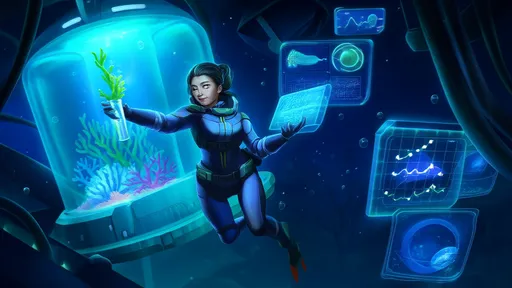
The concept emerged from a grim realization – current conservation efforts might not be enough to save coral reefs from mass bleaching events. While protecting reef habitats remains crucial, scientists recognized the need for a parallel approach that addresses the fundamental vulnerability of coral-algae partnerships to temperature spikes. The Gene Ark collects and cryopreserves diverse strains of Symbiodiniaceae, the photosynthetic algae that corals depend on for survival.
Deep in the vaults of marine research stations, liquid nitrogen tanks now house hundreds of algal specimens collected from reefs across the globe. These include rare heat-tolerant varieties discovered in unusually warm reef areas. Researchers painstakingly document each strain's thermal tolerance, growth rate, and compatibility with different coral species. The resulting database serves as both an insurance policy and a research tool for assisted evolution projects.
The selection process for these algal "superheroes" involves rigorous testing. Scientists expose candidate strains to gradually increasing temperatures while monitoring their photosynthetic performance. Only the top 5% of performers make it into the ark. Some promising specimens come from surprising locations – like urban reefs subject to thermal pollution or shallow tide pools that experience extreme daily temperature swings.
Critics initially questioned whether focusing on the algal partner alone could make a meaningful difference. Coral resilience depends on complex interactions between the animal host, its algal symbionts, and associated bacteria. However, recent studies demonstrate that heat-resistant algae can significantly improve a coral's bleaching threshold – sometimes by as much as 2°C. This margin could determine whether reefs survive projected climate scenarios.
The ark's architects emphasize that their goal isn't to replace natural symbionts but to preserve options for future reef restoration. As ocean temperatures continue rising, conservationists may need to introduce more resilient algae to struggling reefs. The stored genetic material ensures they'll have carefully vetted options rather than resorting to untested solutions in crisis situations.
Collection expeditions face numerous challenges, from obtaining international sampling permits to keeping delicate algae alive during transport. Some particularly valuable strains come from remote locations or deep reef zones rarely visited by researchers. The team has developed specialized equipment to maintain stable conditions during transit, including portable temperature-controlled chambers and light-regulation systems.
Beyond preservation, the ark facilitates groundbreaking research into coral-algal symbiosis. Scientists are sequencing the genomes of particularly resilient strains to identify heat tolerance markers. Others study how different algal-coral combinations perform under various stress conditions. This work has already revealed surprising diversity in how symbionts respond to environmental pressures.
The project maintains strict protocols to prevent contamination between strains. Each specimen undergoes quarantine and disease screening before entering the collection. Storage facilities implement redundant backup systems to protect against power failures or equipment malfunctions. These precautions reflect the irreplaceable nature of some samples – certain algal types may no longer exist in the wild due to reef degradation.
Funding the initiative remains an ongoing challenge. Unlike crop seed banks that directly support agriculture, the Coral Gene Ark serves a less tangible conservation purpose. Project leaders have forged partnerships with zoos, aquariums and biotechnology companies to sustain operations. Some pharmaceutical firms contribute resources in exchange for access to algal compounds with potential medical applications.
Looking ahead, the team plans to expand collections from under-represented regions, particularly the Coral Triangle and Caribbean. They're also developing protocols for "reactivating" cryopreserved algae and reintroducing them to coral hosts. Pilot projects in Australia have shown promising results, with some restored corals maintaining their new symbionts through multiple generations.
As the climate crisis intensifies, the Coral Gene Ark represents both a sobering acknowledgment of ecological threats and an innovative approach to conservation. By safeguarding the building blocks of coral resilience, scientists hope to buy precious time for reefs while society addresses the root causes of ocean warming. The project stands as a testament to human ingenuity in the face of environmental challenges – and a reminder of how much we stand to lose.
The initiative has sparked broader discussions about assisted evolution in conservation. While some purists argue against human intervention in natural systems, most marine biologists now agree that extraordinary times call for extraordinary measures. The ark's creators emphasize that their work complements rather than replaces traditional conservation strategies like marine protected areas and pollution reduction.
Public engagement forms a crucial component of the project. Through partnerships with science museums and educational programs, the team raises awareness about coral reef ecology and the science behind their work. Interactive exhibits let visitors view different algal strains under microscopes and understand their vital role in marine ecosystems. This outreach helps build support for both high-tech solutions and fundamental marine protections.
Technological advances continue to enhance the ark's capabilities. Recent developments in cryopreservation allow for longer-term storage with better viability rates. Automated monitoring systems track each specimen's condition in real time. Machine learning algorithms help predict which algal-coral combinations might perform best under future climate scenarios, guiding collection priorities.
The project's ultimate success will depend on factors beyond biology. Political will to address climate change, funding for reef restoration, and public support for marine conservation all play critical roles. The Coral Gene Ark team remains cautiously optimistic, noting that their work represents just one piece of a much larger puzzle – but potentially a crucial one for the future of coral reefs worldwide.
By /Aug 14, 2025
By /Aug 14, 2025
By /Aug 14, 2025
By /Aug 14, 2025

By /Aug 14, 2025

By /Aug 14, 2025

By /Aug 14, 2025

By /Aug 14, 2025
By /Aug 14, 2025
By /Aug 14, 2025
By /Aug 14, 2025

By /Aug 14, 2025
By /Aug 14, 2025

By /Aug 14, 2025
By /Aug 14, 2025
By /Aug 14, 2025

By /Aug 14, 2025
By /Aug 14, 2025
By /Aug 14, 2025

By /Aug 14, 2025
