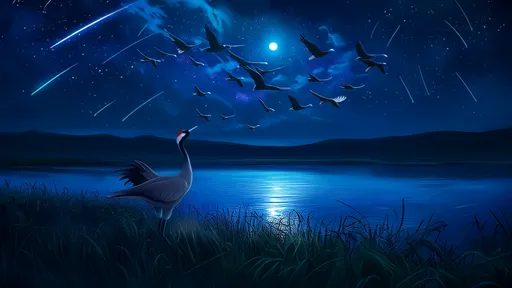
The night sky has always been a source of wonder and guidance for both humans and animals alike. Among the most fascinating navigators of the natural world are migratory birds, which traverse thousands of miles with astonishing precision. Recent studies have shed light on how these avian travelers use the stars to calibrate their internal compasses, a phenomenon known as stellar orientation. This celestial navigation is not just a random act but a finely tuned biological mechanism that has evolved over millennia.
The Science Behind Stellar Orientation
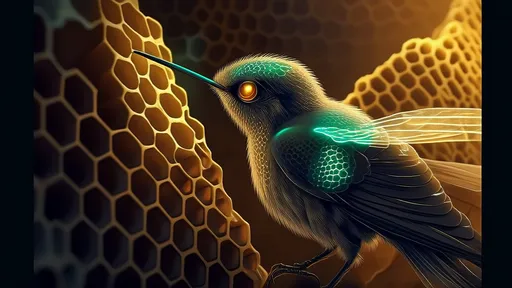
Birds, particularly those that migrate at night, rely heavily on the positions of stars to maintain their course. Researchers have discovered that certain species, such as the indigo bunting, use the rotational patterns of stars around Polaris, the North Star, to determine direction. Unlike humans, who might need a map or GPS, these birds possess an innate ability to read the night sky. Their brains are wired to recognize constellations and use them as fixed reference points, allowing them to adjust their flight paths in real-time.
Experiments conducted in planetariums have confirmed this behavior. When exposed to artificial star patterns, migratory birds adjust their orientation based on the projected celestial movements. If the star patterns are altered or removed, the birds become disoriented, further proving their reliance on stellar cues. This celestial map is not just a backup system—it’s often their primary means of navigation, especially during clear nights when landmarks on the ground are obscured by darkness.
The Role of Circadian Rhythms
Another critical factor in this process is the birds' internal clocks, or circadian rhythms. These biological timers help them synchronize their movements with the Earth’s rotation. By aligning their internal sense of time with the apparent motion of the stars, birds can maintain a consistent heading. This synchronization is so precise that even slight disruptions, such as artificial light pollution, can throw off their navigation. The interplay between their biological clocks and the starry sky is a delicate dance that ensures they stay on course.
Interestingly, young birds learning to migrate for the first time don’t inherit a detailed star map. Instead, they learn the patterns by observing the night sky over time. This learning phase is crucial, as it allows them to imprint the rotational axis of the stars, particularly around Polaris. Once this knowledge is ingrained, it becomes second nature, enabling them to undertake their long journeys with remarkable accuracy.
Challenges in the Modern World
While stellar navigation has served birds well for centuries, modern challenges threaten this ancient system. Light pollution from cities and towns can drown out the stars, leaving birds without their celestial guideposts. Studies have shown that birds flying near urban areas often exhibit erratic flight patterns, sometimes circling brightly lit buildings until they exhaust themselves. This disorientation not only disrupts their migration but can also lead to fatal collisions.
Climate change adds another layer of complexity. Shifts in weather patterns and seasonal timing can misalign the availability of food sources with migration schedules. While birds are adaptable, the rapid pace of environmental change tests the limits of their stellar navigation systems. Conservationists are now advocating for darker skies and reduced artificial lighting during peak migration seasons to help these avian navigators stay on track.
The Future of Research
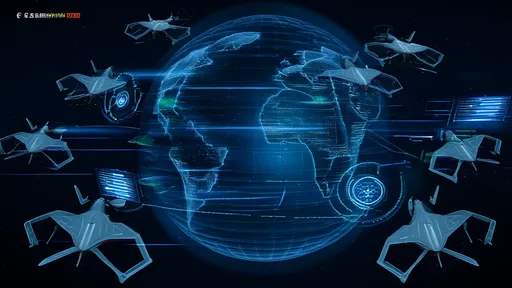
Scientists continue to explore the intricacies of avian stellar navigation, using advanced technologies like GPS tracking and neural imaging. These tools allow researchers to map the brain activity of birds as they process stellar information, offering deeper insights into how their navigation systems work. There’s also growing interest in biomimicry—applying these natural navigation techniques to human technology, such as autonomous drones or space exploration systems.
Understanding how birds use the stars to navigate not only satisfies scientific curiosity but also highlights the delicate balance between nature and technology. As we uncover more about these feathered astronomers, we’re reminded of the profound connections between Earth and the cosmos—a relationship that has guided life for eons and continues to inspire awe.

By /Aug 12, 2025

By /Aug 12, 2025

By /Aug 12, 2025
By /Aug 12, 2025
By /Aug 12, 2025
By /Aug 12, 2025
By /Aug 12, 2025

By /Aug 12, 2025

By /Aug 12, 2025
By /Aug 12, 2025

By /Aug 12, 2025
By /Aug 12, 2025

By /Aug 12, 2025

By /Aug 12, 2025
By /Aug 12, 2025
By /Aug 12, 2025

By /Aug 12, 2025
By /Aug 12, 2025
By /Aug 12, 2025
By /Aug 12, 2025