In the harsh, sun-baked landscapes of Australia, where drought can stretch for years and rainfall is as unpredictable as a roll of dice, nature has engineered one of its most extraordinary survival strategies. The phenomenon of embryonic diapause—a biological "pause button" employed by kangaroos and some other marsupials—offers a fascinating glimpse into evolutionary ingenuity. This reproductive adaptation allows female kangaroos to suspend the development of their embryos until environmental conditions improve, effectively turning their bodies into living time capsules of potential life.
The Mechanics of Life on Hold
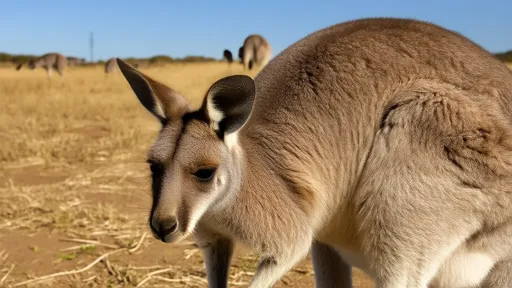
At the heart of this survival mechanism lies a delicate interplay between physiology and environmental cues. When a female kangaroo gives birth, her newborn joey—barely the size of a jellybean—crawls into her pouch to continue developing. Remarkably, she often already carries a second fertilized embryo in her uterus, frozen at the blastocyst stage. This embryo remains in a state of suspended animation, neither growing nor deteriorating, until the first joey either leaves the pouch or perishes. Should drought or food scarcity threaten the survival of her current offspring, the mother’s body can reactivate the dormant embryo, resuming pregnancy without the need to mate again.
Scientists describe this process as facultative embryonic diapause, a mouthful of a term for what amounts to a life-saving contingency plan. Hormonal signals, particularly those related to lactation and stress, govern the on-off switch for embryonic development. When a mother kangaroo stops producing milk—often due to malnutrition from drought—the drop in prolactin levels releases the biochemical brakes on the waiting embryo. Within days, pregnancy resumes, offering a second chance at reproduction when conditions improve.
An Evolutionary Masterstroke
This reproductive strategy didn’t emerge by accident. Australia’s climate has always been one of extremes, with periods of abundance followed by crushing droughts that can decimate wildlife populations. Kangaroos, as grazing animals, are particularly vulnerable to these fluctuations. Embryonic diapause allows them to synchronize reproduction with environmental booms, ensuring that vulnerable joeys emerge during times of plenty rather than scarcity.
Other species exhibit similar adaptations. The tiny honey possum, for instance, can maintain embryos in diapause for nearly a year. Even some placental mammals, like certain deer and seals, employ versions of this strategy. But kangaroos have refined it to near perfection. A mother kangaroo can theoretically maintain three distinct stages of offspring simultaneously: a joey hopping at her side, another nursing in her pouch, and a paused embryo waiting in the wings. This staggered approach maximizes reproductive success in an environment where survival is never guaranteed.
Climate Change and the Future of Diapause
As climate change intensifies drought cycles across Australia, scientists are closely monitoring how kangaroo populations adapt. Longer, more severe dry spells could test the limits of embryonic diapause. While the mechanism is robust, it’s not infinite—prolonged malnutrition can eventually shut down reproduction entirely. Researchers have documented cases where female kangaroos abandon their pouched young during extreme droughts, a heartbreaking but pragmatic decision to conserve resources for future breeding attempts.
Conservationists worry that if droughts become too frequent or prolonged, even this remarkable adaptation may not be enough to sustain populations. Some studies suggest that kangaroos in particularly arid regions are already breeding less frequently, their bodies holding embryos in diapause for extended periods while waiting for rains that never come. This has led to calls for more comprehensive land management strategies that preserve critical feeding grounds and water sources, giving nature’s pause button a fighting chance.
Lessons from the Outback
Beyond its biological marvels, the kangaroo’s reproductive strategy offers metaphors for human resilience. In a world increasingly defined by environmental uncertainty, the ability to pause, wait, and restart when conditions allow feels particularly poignant. Researchers studying drought-resistant crops have even looked to diapause-like mechanisms for inspiration, exploring ways to engineer seeds that remain dormant until detecting adequate moisture.
For now, the kangaroo remains the undisputed champion of reproductive flexibility. Each time a mother kangaroo’s body decides whether to resume a paused pregnancy, she embodies millions of years of evolutionary wisdom—a living testament to life’s stubborn persistence in the face of adversity. As the Australian outback grows hotter and drier, this ancient survival protocol may well determine whether future generations of kangaroos continue to bound across the red desert sands.
The story of embryonic diapause isn’t just about kangaroos; it’s a narrative written into the DNA of all life. In suspended animation, there is hope. In patience, there is survival. And in the unlikeliest of places—the scorched earth of a drought-stricken landscape—nature whispers its most enduring lesson: sometimes, the best way forward is to wait.
By /Aug 12, 2025

By /Aug 12, 2025
By /Aug 12, 2025
By /Aug 12, 2025
By /Aug 12, 2025
By /Aug 12, 2025
By /Aug 12, 2025
By /Aug 12, 2025
By /Aug 12, 2025
By /Aug 12, 2025
By /Aug 12, 2025
By /Aug 12, 2025
By /Aug 12, 2025
By /Aug 12, 2025
By /Aug 12, 2025
By /Aug 12, 2025
By /Aug 12, 2025
By /Aug 12, 2025
By /Aug 12, 2025
By /Aug 12, 2025
