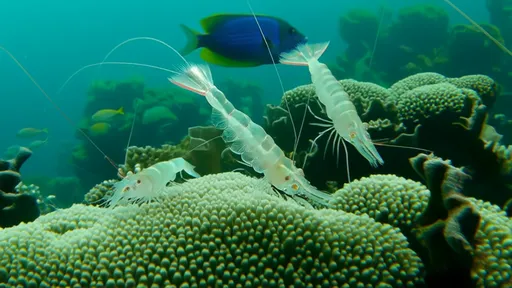
In the vibrant underwater cities of coral reefs, an unexpected form of social commerce thrives—one where cleanliness is currency, and reputation is everything. At the heart of this system are cleaner shrimp, tiny crustaceans that have evolved not just to serve their ecosystem but to dominate its economic underpinnings. Their "business model" is simple: offer grooming services to larger fish, removing parasites and dead skin in exchange for safety and sustenance. But beneath this straightforward transaction lies a complex web of trust, evaluation, and social feedback that mirrors human systems like Yelp or TripAdvisor.
The Cleaner Shrimp's Storefront
Positioned prominently on coral outcrops or anemone-covered rocks, cleaner shrimp set up shop like miniature storefronts. Their waving antennae and distinctive movements act as neon signs advertising their services. Client fish—ranging from small wrasses to imposing groupers—line up patiently, sometimes even forming orderly queues. The shrimp's reputation precedes them; a single bad interaction can send their clientele fleeing, while consistent quality service builds a loyal customer base. This isn't just symbiosis—it's a fully operational service industry where customer satisfaction dictates survival.
How Reputation Travels in Liquid Space
Unlike terrestrial animals that rely heavily on visual or auditory cues, reef dwellers communicate through more subtle means. Studies suggest fish observe each other's interactions with cleaners before choosing where to go. A grouper lingering too long at one station might indicate inefficiency, while rapid repeat visits signal reliability. The shrimp themselves appear to adjust their behavior based on audience size—meticulously grooming clients when potential new customers are watching. This real-time performance adjustment suggests an understanding of social proof that would make Silicon Valley marketers envious.
The Consequences of Bad Reviews
Just as a restaurant might fold after too many one-star ratings, cleaner shrimp face dire consequences for poor service. Documented cases show shrimp that cheat by nibbling healthy tissue instead of parasites quickly develop bad reputations. Client fish avoid them, sometimes for extended periods. The shrimp must then either relocate—a dangerous prospect in predator-filled waters—or dramatically improve service quality. This accountability mechanism keeps the system honest in ways that often surpass human regulatory systems.
Specialization and Brand Differentiation
Not all cleaner shrimp offer identical services. Some species specialize in particular fish or specific parasites, creating niche markets. The spotted cleaner shrimp (Periclimenes yucatanicus) for instance, tends to work with moray eels, developing unique techniques for navigating their fearsome jaws. This specialization allows multiple cleaner species to coexist on the same reef without excessive competition—an underwater version of market segmentation where different businesses cater to distinct client demographics.
The Role of Fixed Locations
Unlike mobile cleaning fish that travel to their clients, most cleaner shrimp maintain stationary "cleaning stations." These fixed locations become landmarks in the reef's mental map for many fish species. The constancy of place adds another layer to the reputation economy—regular clients know exactly where to return for quality service, while newcomers can easily find established providers. This spatial element creates a commercial geography not unlike restaurant rows in human cities, where clustering similar services actually benefits all participants through increased foot traffic.
When Clients Become Critics
Fish clients aren't passive participants in this system. They've been observed punishing dishonest cleaners through various means—from immediate termination of the session (swimming away mid-cleaning) to more aggressive responses like chasing the shrimp. Some species appear to "complain" to other fish through specific body language, effectively leaving negative reviews that influence the community's choices. This client empowerment maintains service standards without any centralized authority—a purely decentralized reputation system that has persisted for millions of years.
Seasonal Fluctuations and Market Demands
The cleaning industry experiences boom and bust cycles tied to environmental factors. During parasite outbreaks, cleaner shrimp find themselves overwhelmed with clients, leading to shorter cleaning sessions and potentially lower quality. In lean times, they must work harder to attract fewer clients, sometimes offering "specials" like more thorough inspections. Some research suggests cleaner shrimp may even adjust their reproductive cycles to align with seasonal increases in potential clients—timing their offspring's arrival to coincide with peak market demand.
The Dark Side of the Reputation Economy
Not all interactions follow this utopian model of mutual benefit. Some fish species exploit the system by eating cleaner shrimp after receiving service—the aquatic equivalent of dining and dashing. This creates an evolutionary arms race where shrimp must better assess client risk while fish develop more convincing "honest customer" behaviors. Additionally, some shrimp occasionally turn to cheating when supervision is lax, highlighting how even the most stable reputation systems face constant threats from bad actors.
Implications Beyond the Reef
The cleaner shrimp's reputation economy offers surprising insights for human systems. Their success demonstrates how complex social and economic structures can emerge without language, writing, or technology. The system's resilience—persisting across millennia with no central oversight—suggests reputation may be a more fundamental organizing principle than previously thought. As we design increasingly digital reputation systems for online commerce and social media, we might look to these crustacean capitalists for timeless lessons in building trust-based economies.
From their waving antennae advertisements to their client satisfaction tracking, cleaner shrimp have perfected a service economy that would make any entrepreneur envious. Their coral reef marketplaces prove that reputation systems predate not just the internet, but humanity itself—and that the basic rules of good business remain constant whether your office is a corporate tower or a sea anemone.

By /Aug 12, 2025

By /Aug 12, 2025

By /Aug 12, 2025

By /Aug 12, 2025

By /Aug 12, 2025
By /Aug 12, 2025

By /Aug 12, 2025
By /Aug 12, 2025

By /Aug 12, 2025

By /Aug 12, 2025

By /Aug 12, 2025

By /Aug 12, 2025
By /Aug 12, 2025
By /Aug 12, 2025

By /Aug 12, 2025
By /Aug 12, 2025

By /Aug 12, 2025
By /Aug 12, 2025
By /Aug 12, 2025

By /Aug 12, 2025
