In the dense forests of Southern Asia, where human settlements increasingly overlap with traditional wildlife corridors, a unique technological solution is emerging to mitigate deadly conflicts between humans and the region's iconic Asian elephants. Researchers and conservationists are now leveraging seismic sensing technology – originally developed for earthquake early warning systems – to detect elephant movements and prevent violent encounters before they occur.
The growing human-elephant conflict has reached crisis proportions across much of Southeast Asia. As agricultural lands expand and elephant habitats fragment, these intelligent giants frequently raid crops for food, sometimes resulting in fatalities on both sides. Traditional deterrents like electric fences or firecrackers often prove ineffective against determined herds and may even aggravate the situation. What makes this conflict particularly challenging is elephants' ability to move silently through dense vegetation at night, appearing suddenly near villages with little warning.
This is where ground vibration detection technology offers a game-changing approach. Elephants, being the largest land mammals, generate distinct seismic signatures as they move. Their footfalls create low-frequency waves that travel efficiently through soil and bedrock, often farther than sound waves propagate through air. By deploying arrays of sensitive seismometers along known elephant pathways, conservation teams can detect approaching herds several kilometers away.
How the system works involves sophisticated signal processing. The sensors, buried at strategic locations, continuously monitor ground vibrations across specific frequency bands. Elephant movements typically register between 10-30 Hz, distinct from most other seismic noise sources. When multiple sensors detect coherent signals matching an elephant's signature, algorithms estimate the direction, speed, and size of the moving group. This data gets relayed to ranger stations and nearby villages via wireless networks, providing crucial lead time for preventive measures.
The technology's effectiveness stems from its early detection capability. Unlike visual or infrared systems limited by line-of-sight, ground waves propagate through terrain features that would block other signals. This allows detection even when elephants move through thick jungle or hilly areas. Field tests in Myanmar's conflict zones demonstrated the system detecting elephant groups 15-20 minutes before they reached village peripheries - enough time for warning broadcasts and defensive preparations.
Interestingly, the seismic approach also helps address elephants' behavioral adaptation to human deterrents. Elephants have demonstrated remarkable learning capacity, often figuring out ways around physical barriers or becoming habituated to noise makers. Since they remain unaware of the underground sensors, their movement patterns remain unaffected by the monitoring system, making the detection data more reliable over time.
Implementation challenges do exist. The sensor networks require careful calibration to distinguish elephant signals from other ground vibrations caused by vehicles, machinery, or even other large animals. Researchers have developed machine learning classifiers trained on thousands of hours of verified elephant movement data to improve accuracy. Maintenance in remote, humid environments also poses technical difficulties, prompting the development of ruggedized, solar-powered units with self-diagnostic capabilities.
Community integration forms another critical component. Successful deployments combine the technical system with comprehensive education programs teaching villagers how to respond to alerts. Rather than confronting approaching elephants, communities learn to temporarily evacuate perimeter areas or use non-confrontational diversion tactics. In several pilot areas, this combination of early warning and trained response has reduced conflict incidents by over 70%.
The technology's potential extends beyond immediate conflict prevention. Long-term seismic monitoring provides valuable data about elephant movement ecology, revealing previously unknown migration routes and seasonal patterns. Conservation planners use this information to design more effective wildlife corridors and habitat protection strategies. Some research teams are even exploring whether seismic signatures can help identify individual elephants based on their unique walking patterns.
As climate change alters vegetation patterns and water availability, forcing elephants to range farther for resources, such early warning systems may become increasingly vital for coexistence. The seismic approach offers particular promise because of its relatively low cost compared to aerial surveillance or extensive fencing projects. With proper maintenance, a sensor network can protect multiple villages across a wide area.
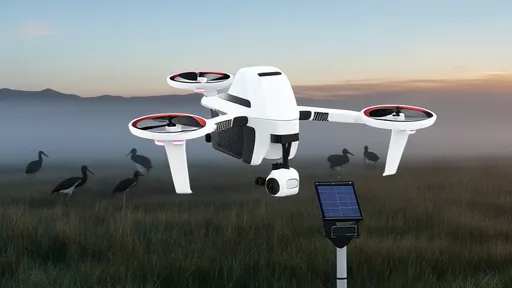
Looking ahead, researchers aim to integrate the seismic data with other monitoring technologies like drone surveillance and acoustic sensors for more comprehensive coverage. There's also work underway to develop automated alert systems that send warnings directly to villagers' mobile phones, crucial for nighttime detection when most conflicts occur. These technological solutions, combined with habitat conservation and community education, provide hope for balancing the needs of both humans and Asia's last remaining wild elephants.
The development represents an inspiring example of cross-disciplinary innovation, where earthquake monitoring technology gets repurposed for wildlife conservation. It underscores how solutions to complex environmental challenges often emerge at the intersection of different fields - in this case, seismology, ecology, and conflict resolution. As human populations continue expanding into wild spaces worldwide, such creative applications of existing technologies may hold keys to peaceful coexistence with wildlife.

By /Aug 12, 2025

By /Aug 12, 2025

By /Aug 12, 2025

By /Aug 12, 2025

By /Aug 12, 2025

By /Aug 12, 2025
By /Aug 12, 2025

By /Aug 12, 2025

By /Aug 12, 2025

By /Aug 12, 2025

By /Aug 12, 2025

By /Aug 12, 2025

By /Aug 12, 2025

By /Aug 12, 2025

By /Aug 12, 2025

By /Aug 12, 2025

By /Aug 12, 2025

By /Aug 12, 2025

By /Aug 12, 2025
By /Aug 12, 2025
